What is EigenLayer? Restaking and When to Skip It
EigenLayer lets you restake ETH or LSTs to secure extra services (AVSs). Verdict-first guide on stacked slashing, why Lido-only staking is enough for most people, and who should not restake.
Free · Editorially independent
Editorial policyUse Lido at stake.lido.fi when you want ETH staking yield as a liquid token (stETH/wstETH) without running a validator. Skip Lido if you need solo-operator control, you cannot accept smart-contract plus slashing risk, or you wanted a CEX earn product. Educational research, not financial advice.
Lido is the largest Ethereum liquid-staking protocol: deposit ETH, hold stETH, keep the asset usable in DeFi. Verdict-first guide on slashing, smart-contract risk, and when Rocket Pool or solo staking is the better fit.
Market context
DeFiLlamaAs of 27 August 2026, What is Lido? stETH Liquid Staking and When to Skip It reports approximately $24.10B total value locked in the liquid staking category across Ethereum, Solana, Terra, Moonriver.
Skip Lido if you wanted to pick your own validator set, you need a bank-style ETH savings account, or you cannot explain the difference between stETH and ETH. Liquid staking adds protocol risk on top of Ethereum staking. wstETH is the DeFi wrapper; stETH rebases.
Related comparisons
Yes — if you want Ethereum staking exposure as a token you can still use in DeFi, and you accept Lido’s smart-contract and operator set on top of protocol staking risk. Skip it if you can and want to solo-stake 32 ETH, or you only wanted Coinbase custodial staking.
DeFiLlama snapshot 2026-08-27: about $24.1 billion TVL for this listing. That is lockup, not a safety rating — re-check the live figure before you size anything.
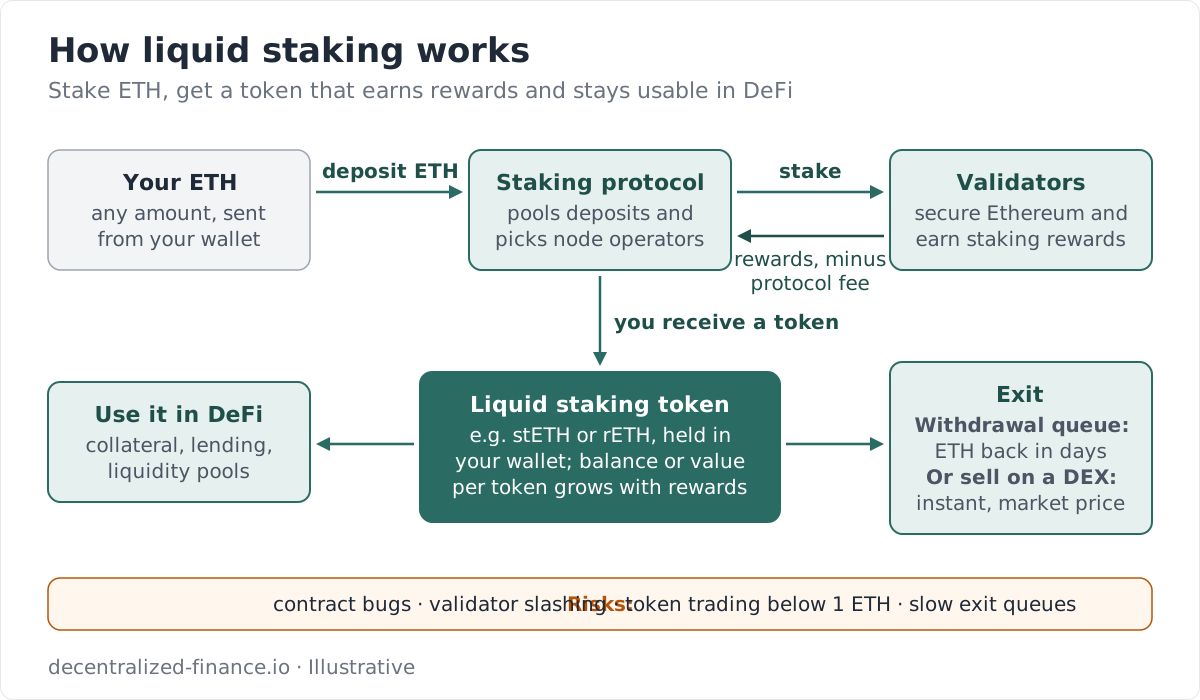
Lido pools ETH, runs validators via a node-operator set, and issues stETH that rebases with staking rewards. wstETH is the non-rebasing wrapper most DeFi protocols list as collateral. You do not get a 1:1 instant ETH redeem from Lido itself in all conditions — exits follow staking queue rules and secondary-market peg.
| Token | What it does | Use when | Skip when |
|---|---|---|---|
| stETH | Rebasing staking receipt | Holding in a wallet that understands rebases | The protocol you want lists wstETH |
| wstETH | Wrapped, non-rebasing | Aave, Morpho, Curve LP | You wanted the rebase in the balance |
| Native stake | 32 ETH validator | You run infrastructure | You wanted a liquid token |
Lido is the deepest stETH market. ether.fi is a liquid-restaking path with a different operator set and eETH design. Native staking maximises control and drops the liquid-token smart-contract layer. wstETH liquidity is why most DeFi loops start on Lido — not why it is safer.
| Want | Use | Skip Lido when |
|---|---|---|
| Liquid ETH staking | Lido stETH/wstETH | You can solo-stake 32 ETH |
| Restaking wrapper | ether.fi eETH | You only wanted staking |
| Own validator | Native 32 ETH | You wanted a liquid token |
stETH trading below ETH, withdrawal queues, operator slashing, and Lido governance concentration bite in stress. A long TVL lead is not insurance. Restaking wstETH elsewhere stacks more contracts. Check the DEX peg before you assume one-to-one with ETH under a redemption rush.
The staking UI we name is stake.lido.fi. You need ETH and a wallet that can hold stETH or wstETH. Our Lido how-to is the click path. This page is whether liquid staking is the right product versus native staking or a CEX earn account.
FAQ
A liquid-staking protocol: deposit ETH, receive stETH or wstETH at stake.lido.fi. You keep a token; you add Lido’s contracts and operator set on top of Ethereum staking risk.
No. It tracks staking rewards and can trade at a discount. Extra smart-contract and operator risk sit on top of Ethereum. wstETH is the usual DeFi wrapper.
Only if you understand the extra protocol. EigenLayer and LRTs are not required to use Lido. Most users should stop at stETH.
No. Educational research only. We do not recommend depositing ETH or buying LDO.
EigenLayer lets you restake ETH or LSTs to secure extra services (AVSs). Verdict-first guide on stacked slashing, why Lido-only staking is enough for most people, and who should not restake.
Aave is the default multi-chain DeFi lending market. V4 (Ethereum, 30 March 2026) uses a Hub for liquidity and Spokes for the market you actually click. Supply for a variable rate, or borrow and watch health factor — including V4’s target-health-factor liquidations.
ether.fi issues eETH, a liquid restaking token. Verdict-first guide on when Lido stETH is the simpler choice and what extra risk eETH adds.